At some point between January and May 1930, Edward Hopper finished a painting depicting a row of two-story buildings along 7th avenue near Washington Square Park in New York City, not far from his studio. By May 1930, the piece, titled Early Sunday Morning, would be acquired by Gertrude Vanderbilt Whitney and within a year it would become a star in the inaugural 1931 exhibition at the Whitney Museum of American Art. So would begin a long and prosperous relationship between a great American museum and one of the greatest American painters.
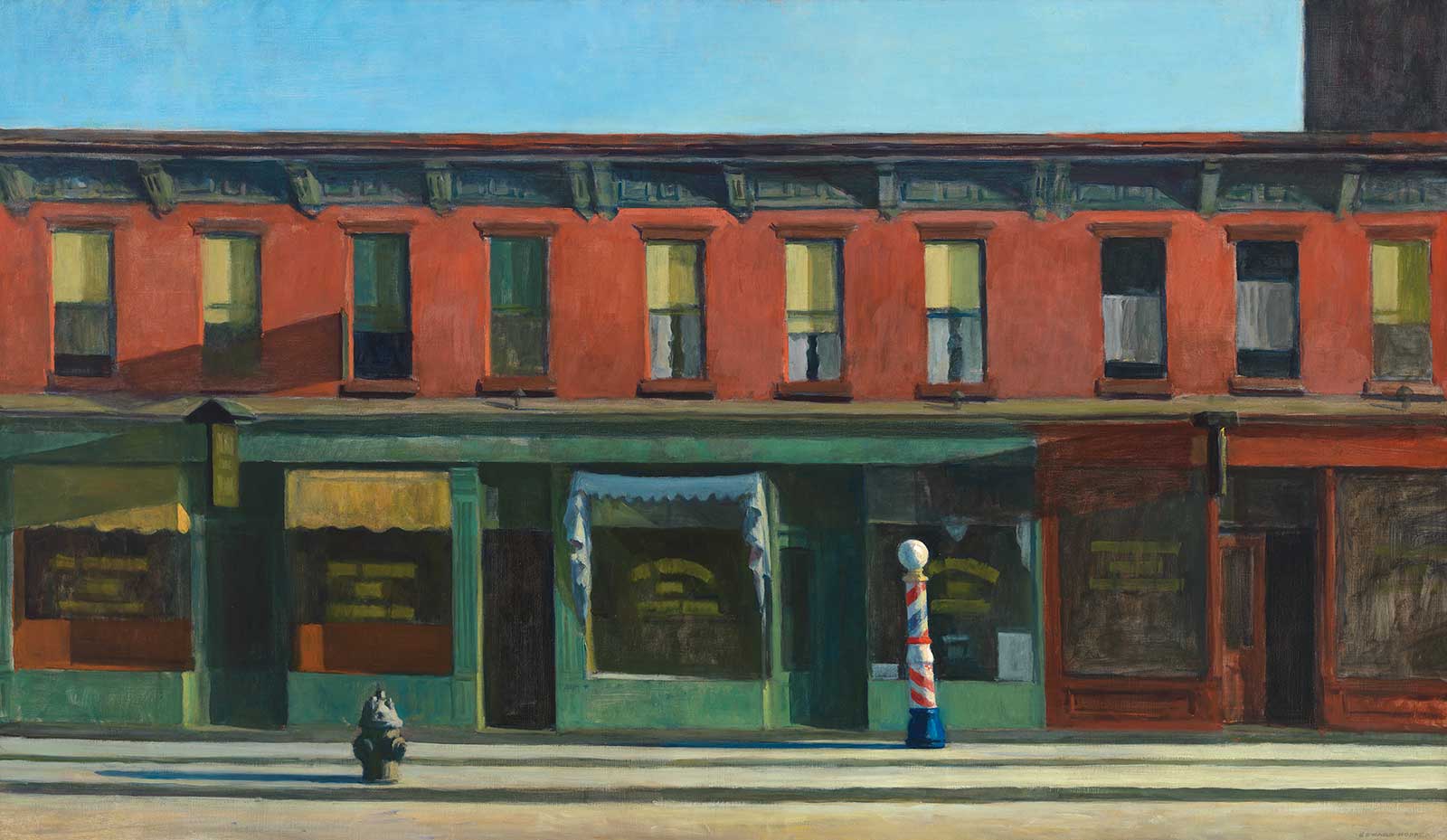 Edward Hopper (1882-1967), Early Sunday Morning 1930. Oil on canvas, 353/16 x 60 ¼ in. Whitney Museum of American Art, New York; purchase with funds from Gertrude Vanderbilt Whitney 31.426. © 2019 Heirs of Josephine N. Hopper / Licensed by VAGA at Artists Rights Society (ARS), New York.
“The career and work of Edward Hopper has been a touchstone for the Whitney since before it was founded as a museum. In 1920, 37-year-old Hopper had his first-ever one-person exhibition at the Whitney Studio Club—an association formed by Gertrude Vanderbilt Whitney to support independent American artists working against the grain of conventional academic art,” writes Adam D. Weinberg, director of the Whitney Museum, in Edward Hopper’s New York. “This presentation consisting of 16 paintings made in Massachusetts, Maine and Paris was organized by artist Guy Pène du Bois—his friend, champion and fellow Studio Club member—and it received little if any critical attention. Two years later Hopper showed 10 Paris watercolor caricatures at the Studio Club and his work was included in a number of other exhibitions there before it closed in 1928 to make way for the Whitney Museum of American Art, which would open in 1931. Hopper’s painting Room in New York was included in the first Whitney Biennial in 1932 and he participated in 29 subsequent biennials and annuals through 1965 as well as several other group exhibitions. In 1950 the Whitney organized the artist’s second career retrospective exhibition, which traveled to Boston and Detroit, and 14 years later launched another major monographic show that traveled to Chicago, Detroit and St. Louis. Since the artist’s death in 1967, the Whitney has organized many monographic exhibitions, large and small, and his work has been included in dozens of group exhibitions at the museum, more than that of any artist.”
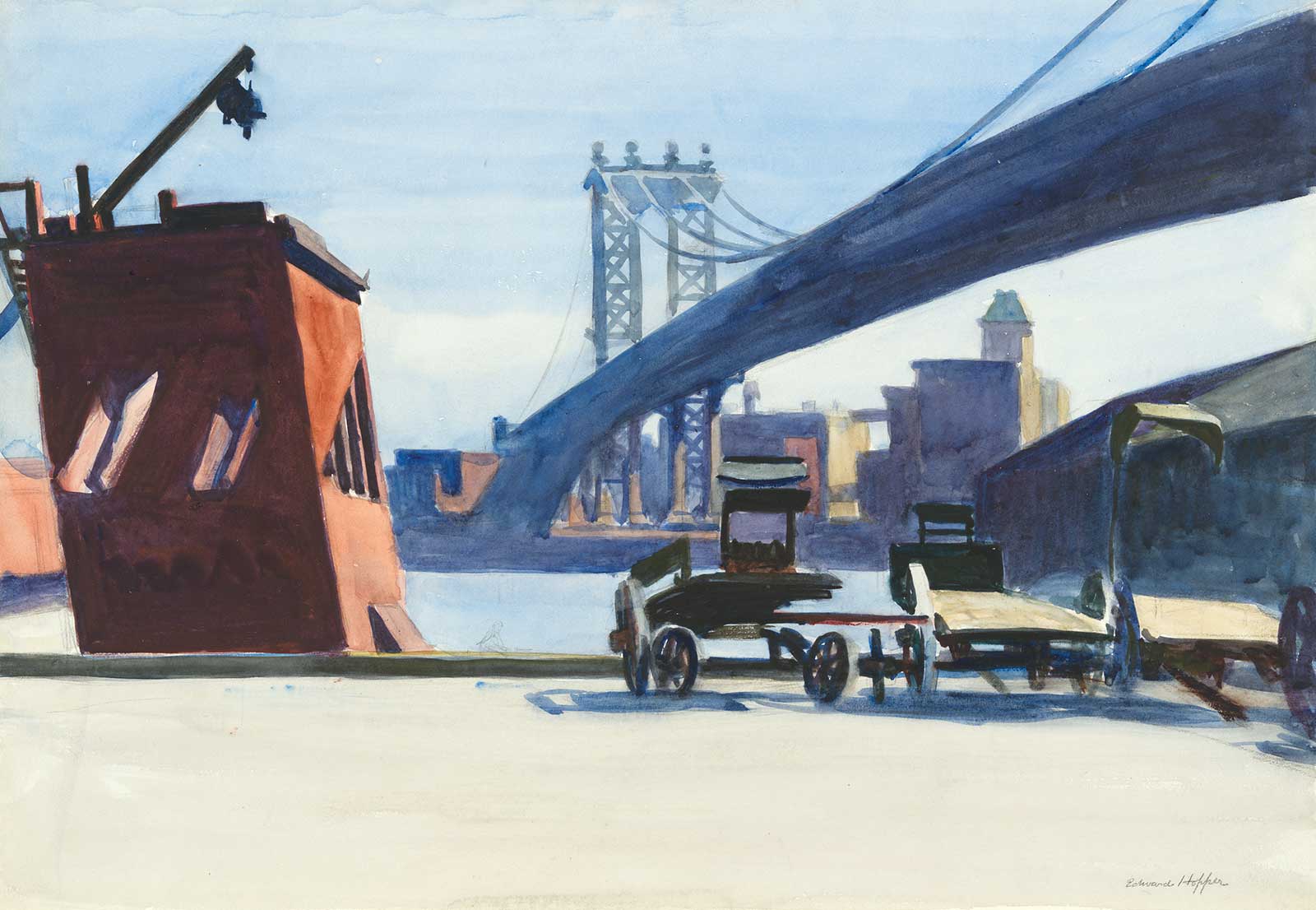 Edward Hopper (1882-1967), Manhattan Bridge, 1925-26. Watercolor and graphite pencil on paper, 1315/16 x 1915/16 in. Whitney Museum of American Art, New York; Josephine N. Hopper Bequest 70.1098 © 2022 Heirs of Josephine N. Hopper/Licensed by Artists Rights Society (ARS), New York.
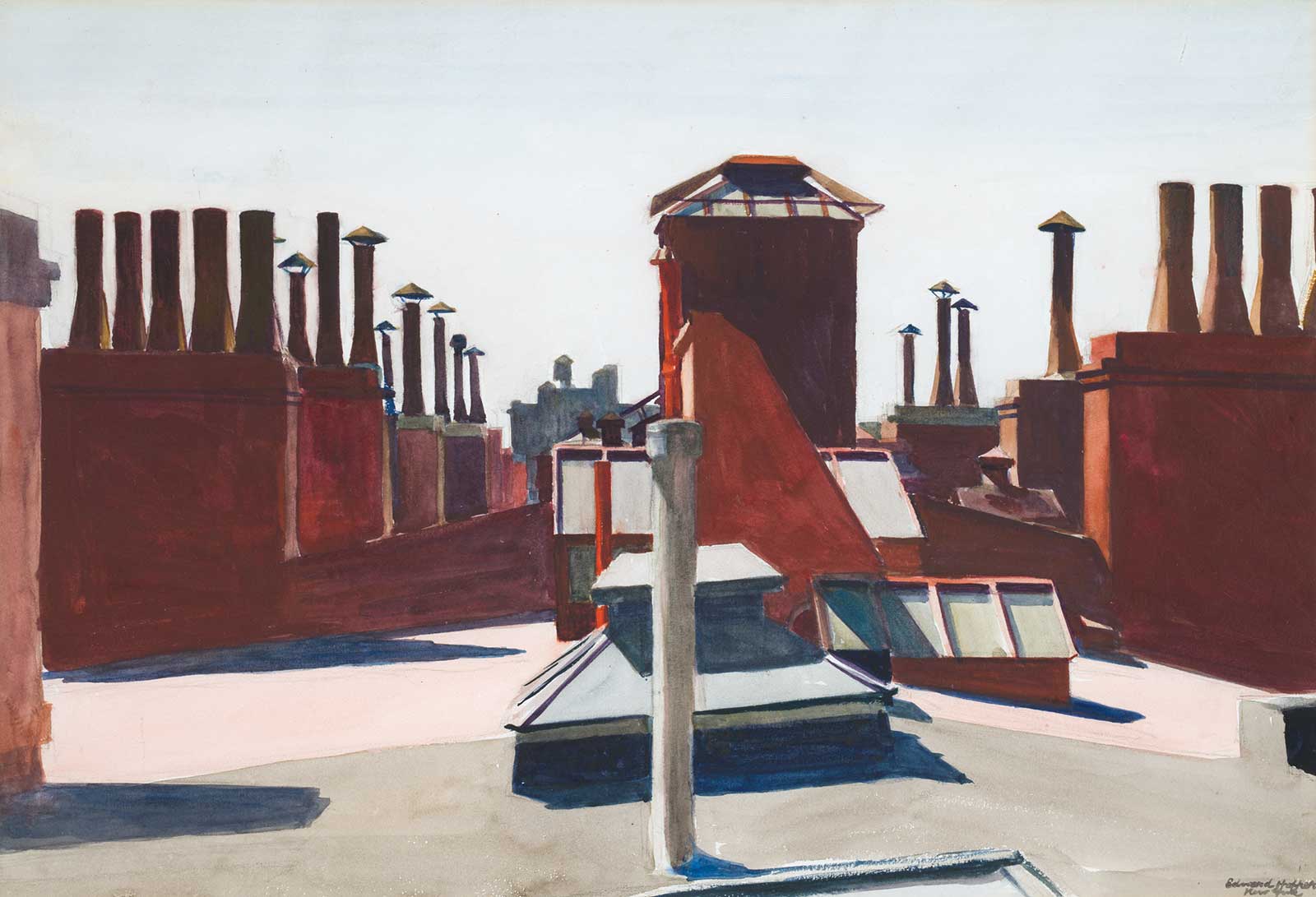 Edward Hopper (1882-1967), Roofs, Washington Square, 1926. Watercolor over charcoal on paper, 137/8 x 197/8 in. Carnegie Museum of Art, Pittsburgh; Bequest of Mr. and Mrs. James H. Beal. © 2022 Heirs of Josephine N. Hopper/Licensed by Artists Rights Society (ARS), New York.
The Whitney and Hopper are once again coming together in a stunning new exhibition titled Edward Hopper’s New York, which opens at the museum on October 19. The exhibition will feature nearly 200 objects, including graphite sketches, preliminary studies, illustration pieces, etchings, self-portraits, archive material and a number of major oil paintings that will be very familiar to many visitors. Works include Two Comedians, Office at Night, Automat, Night Windows, Room in New York, New York Movie, Morning in a City, People in the Sun and many other classic Hopper images that show the artist’s careful observations of people and places in New York City. The exhibition is curated by Kim Conaty, the Steven and Ann Ames Curator of Drawings and Prints at the Whitney.
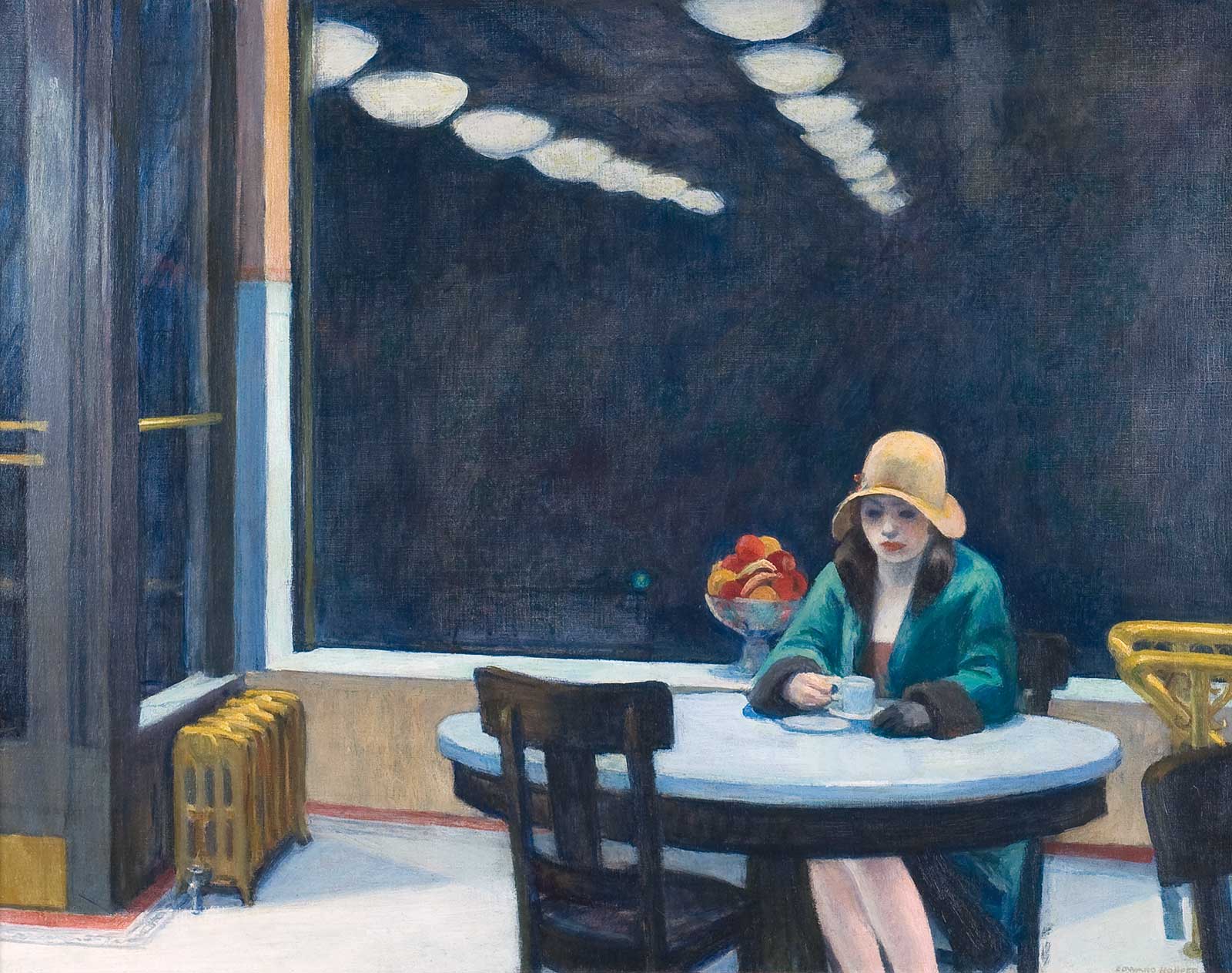 Edward Hopper (1882-1967), Automat, 1927. Oil on canvas, 281/8 x 35 in. Des Moines Art Center, Des Moines, Iowa; purchased with funds from the Edmundson Art Foundation, Inc. © 2022 Heirs of Josephine N. Hopper/Licensed by Artists Rights Society (ARS), New York. Photograph by Rich Sanders, Des Moines, Iowa.
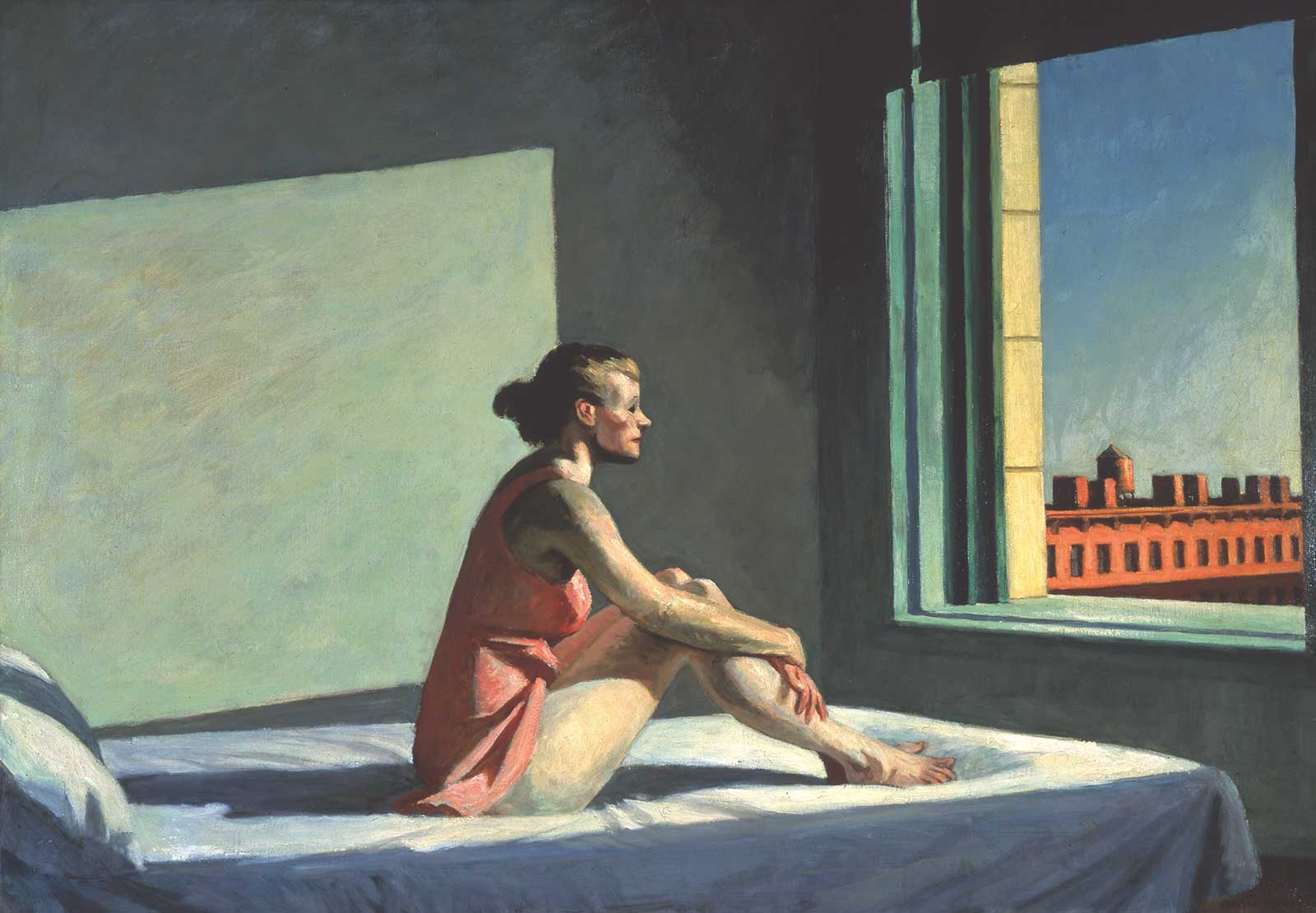 Edward Hopper (1882-1967), Morning Sun, 1952. Oil on canvas, 281/8 x 401/8 in. Columbus Museum of Art, Ohio: Museum Purchase, Howald Fund. © 2022 Heirs of Josephine N. Hopper/Licensed by Artists Rights Society (ARS), New York.
In the exhibition’s catalog, Conaty notes that Hopper was primarily interested in the surface of the Earth and less in the verticality of Manhattan and its great structures. “Hopper’s contrarian take on the contemporary city became a recurring subject in the critical reception of his work around 1930,” she writes. “To some, his penchant for outdated, low-slung 19th-century buildings demonstrated a conscious act of resistance, and his turning away from the present did not go unnoticed by his contemporaries. In fact, it was widely lauded. Critic Edward Alden Jewel reflected in the New York Times: ‘The quest of those fast-disappearing houses of an earlier generation, distinguished by mansard, dormer, turret, and legion gingerbread, has put us manifestly in Hopper’s debt.’ Guy Pène du Bois famously wrote that the New York of his friend Hopper ‘is one that people with their restless need for change have overlooked: it is a part of its backwaters untouched by the swift current of the main tide…His realities are in the past of his youth.’ Hopper’s embrace by the Museum of Modern Art, New York, with a retrospective in 1933 followed on the heels of the young museum’s groundbreaking exhibition the previous year that defined International Style, a coincidence that perhaps prompted director Alfred H. Barr to observe of Hopper: ‘His indifference to skyscrapers is remarkable in a painter of New York architecture.’ Forbes Watson added: ‘Through that hysterical period of American art when the first rush to be modern took place (it had not then become a gold rush) Edward Hopper stalked, a quiet, slightly sneering, silently honest figure of obstinacy.’”
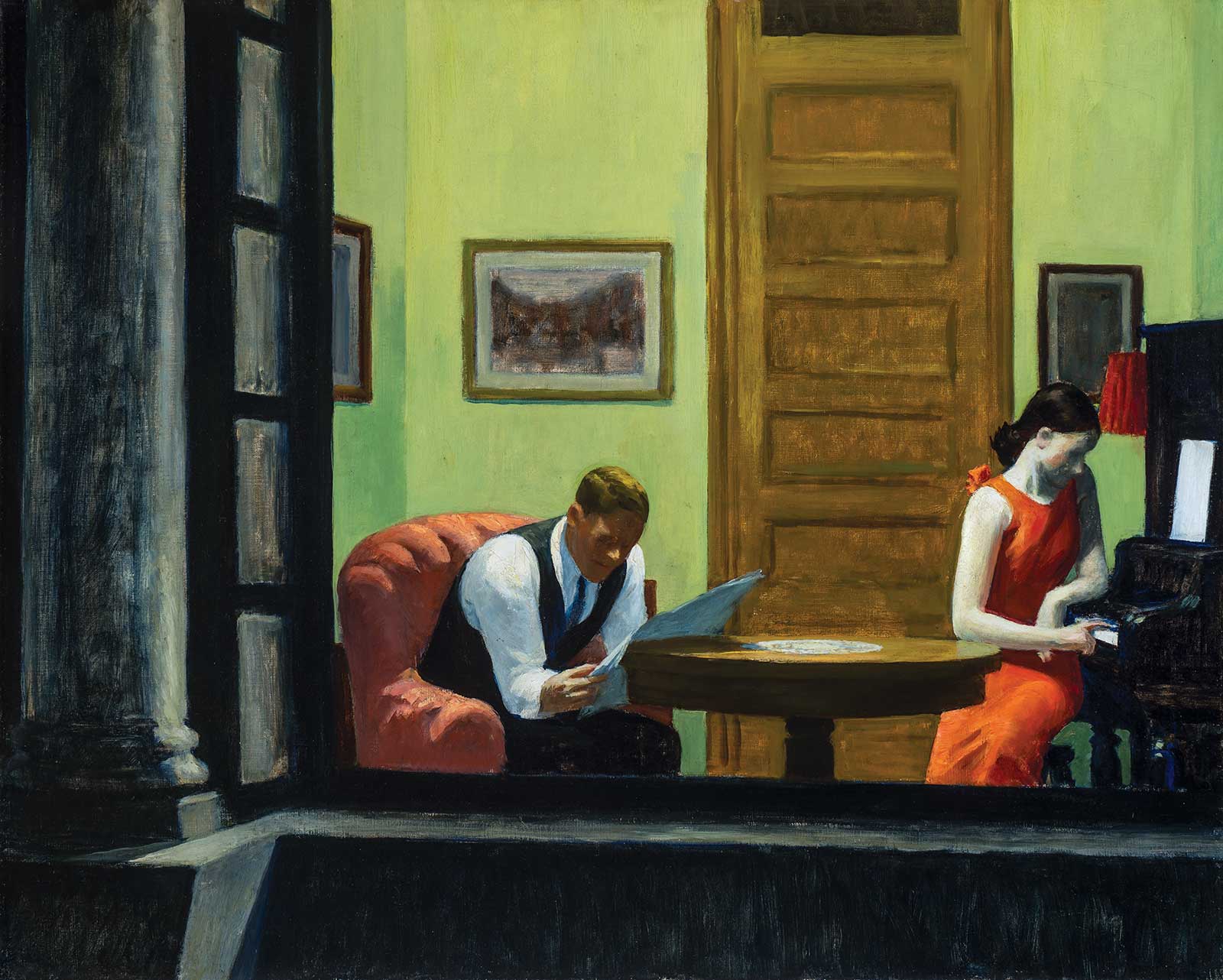 Edward Hopper (1882-1967), Room in New York, 1932. Oil on canvas, 29 x 36 in. Sheldon Museum of Art, University of Nebraska—Lincoln; Anna R. and Frank M. Hall Charitable Trust. © 2022 Heirs of Josephine N. Hopper/Licensed by Artists Rights Society (ARS), New York.
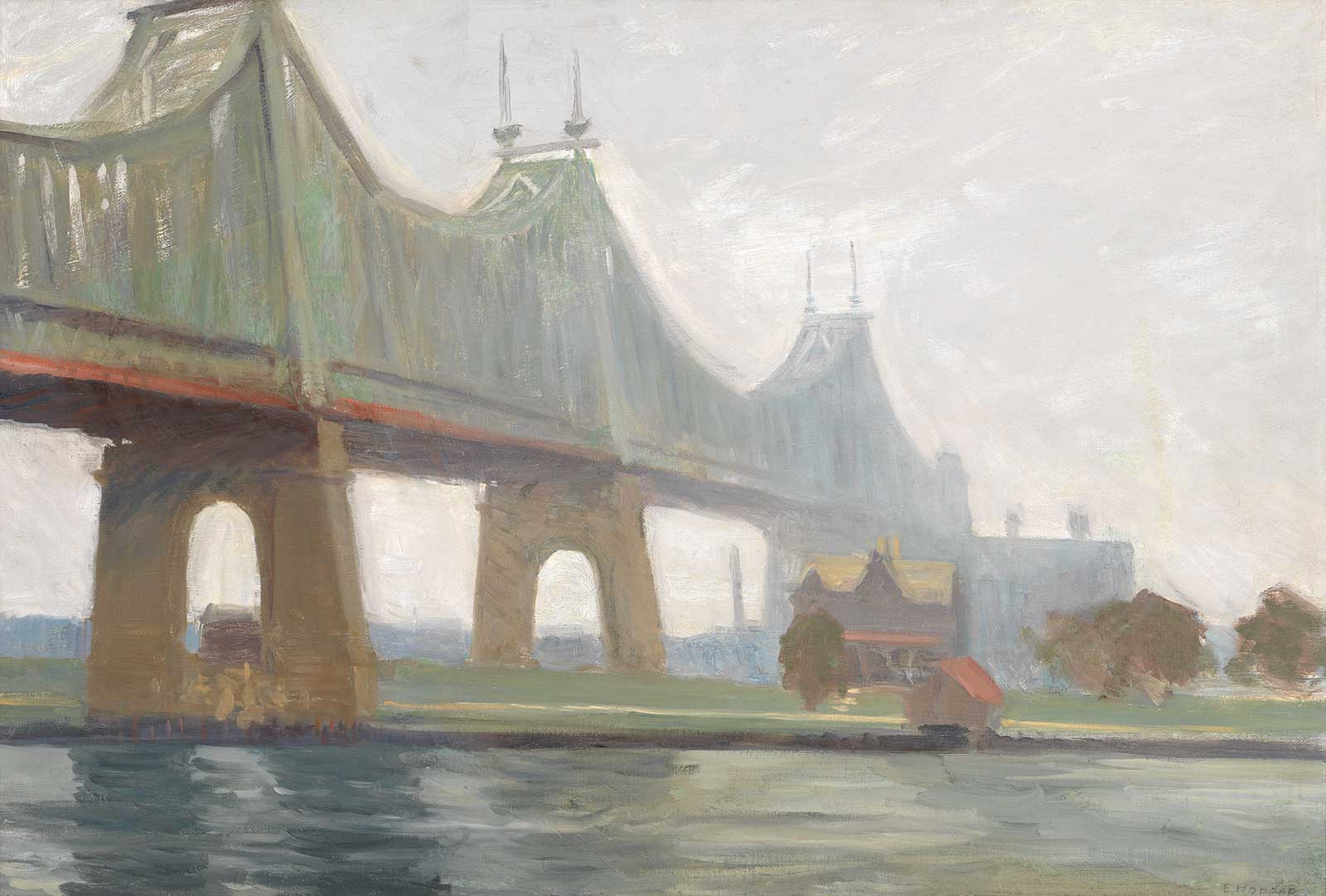 Edward Hopper (1882-1967), Queensborough Bridge 1913. Oil on canvas, 257/8 x 381/8 in. Whitney Museum of American Art, New York; Josephine N. Hopper Bequest 70.1184. © 2022 Heirs of Josephine N. Hopper/Licensed by Artists Rights Society (ARS), New York.
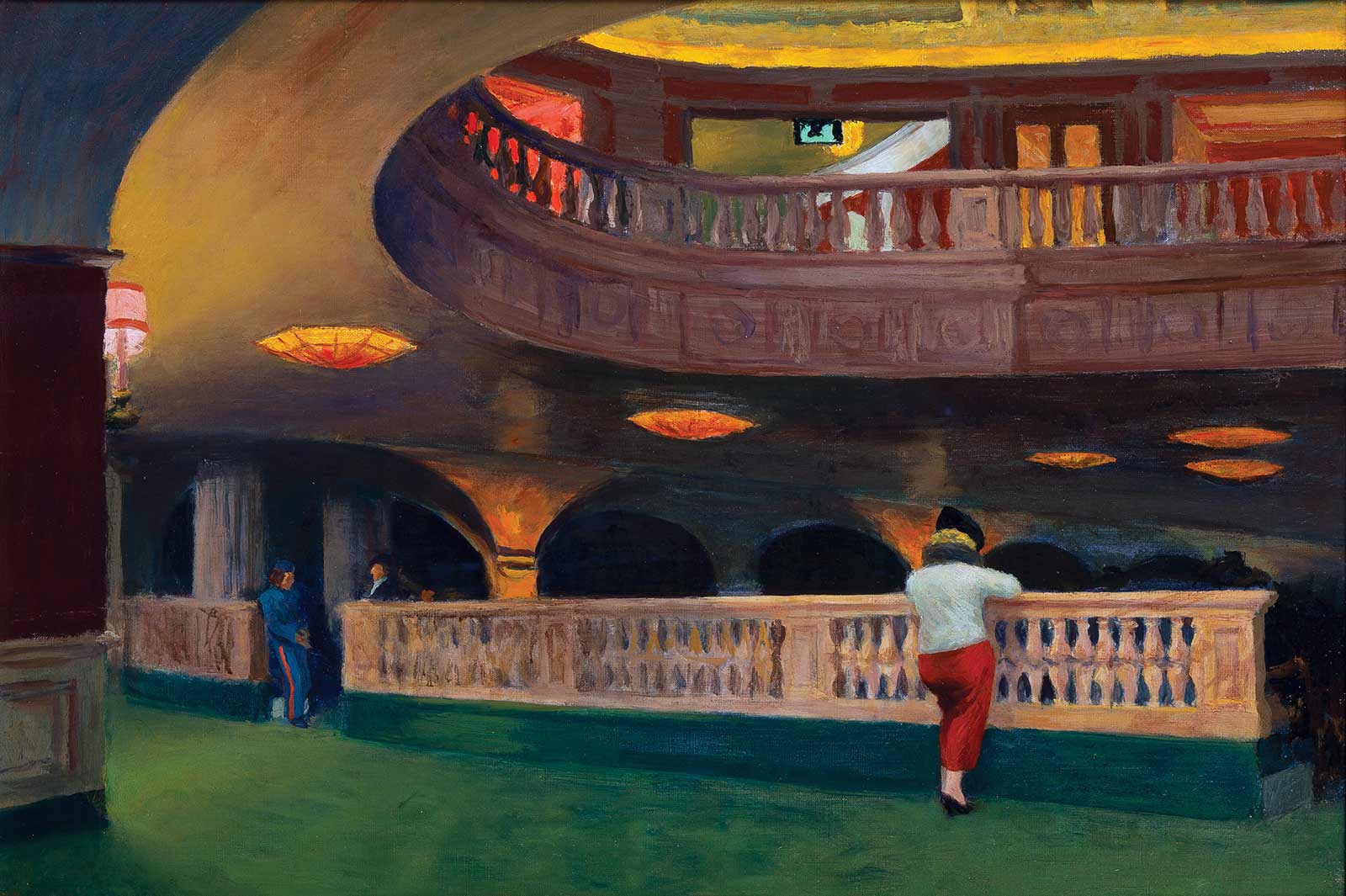 Edward Hopper (1882-1967), The Sheridan Theatre, 1937. Oil on canvas, 17 x 25 in. Newark Museum of Art, NJ; Felix Fuld Bequest Fund. © 2022 Heirs of Josephine N. Hopper/Licensed by Artists Rights Society (ARS), New York. Image courtesy Art Resource.
Hopper’s New York works also highlight his interest in interior spaces as people live their lives. The works have an almost voyeuristic presence to them, as if Hopper is spying into open windows to observe the city’s private moments. “In defiance of architectural logic, Hopper transforms what might have been separate street-level apartment windows into a single storefront-like display, eliminating mullions or frames to create an illuminated scene worthy of cinema,” Conaty writes. “The city’s walls of glass offered myriad compositional and narrative possibilities, allowing Hopper to tap into the discomfiting awareness of being alone in a crowd that had become synonymous with modern urban life. The charged moments Hopper captured in barbershops, restaurants and apartments take on the quality of willful distillations, offering just enough information for the figure to justify the space and for the space to accommodate the figure.”
Edward Hopper’s New York will remain on view through March 5, 2023.
Powered by Froala Editor